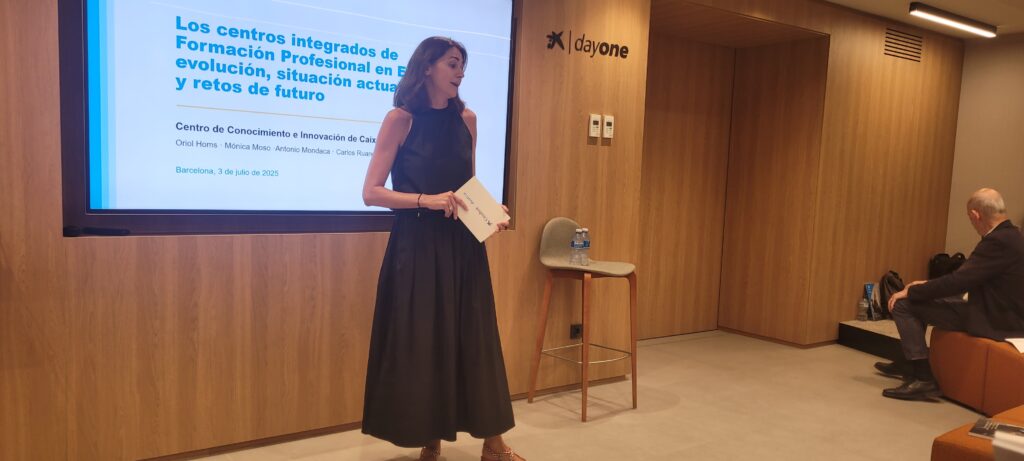
This month I decided that my summer reading wouldn’t be a novel, but rather a report we were given in July in Barcelona: “Integrated VET Centres in Spain: Evolution, Current Situation and Future Challenges”, prepared by CaixaBank Dualiza.
A document that, more than just data, offers clear signals about where we need to move if we truly want Vocational Education and Training to be a real driver of local development.
One of the points that struck me the most is that three out of four integrated centres believe that companies in their area either don’t really know what intensive Dual VET is, or are unwilling to get involved. Honestly, that’s a luxury we can’t afford.
Because VET is neither a fad nor a plan B: it’s a direct path for young people to find real opportunities and for companies to have the skilled talent they need. And here, we can’t just sit back and wait for things to change on their own — it’s time to move.
Moving means opening the doors of our centres so families and students can see what VET can offer them. It means companies and centres meeting without endless protocols, having real conversations, and creating joint projects that address the specific needs of each region. It means giving integrated centres enough autonomy to adapt quickly to changes in the labour market.
And above all, moving means telling real stories: that of the student who found their path thanks to VET, or that of the company that grew by training local talent. Stories that inspire and, when told out loud, help break down prejudices and open new doors.
VET is much more than education: it’s territorial strategy, social cohesion, and quality employment. And we won’t achieve that with reports alone, but with action. Action from the centres, from companies, from families… and from each of us.
Because change starts in the territory. And it starts now.
#VocationalEducation #VET #DualVET #LocalTalent #IntegratedCentres #CaixaBankDualiza