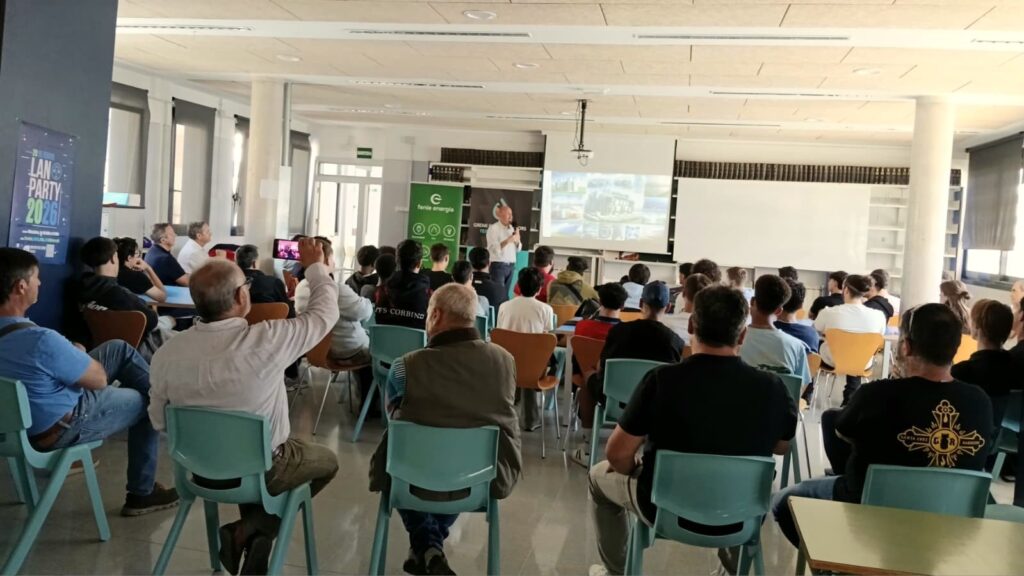
Every time I enter a secondary school or vocational training classroom anywhere in Spain, I carry with me a deep conviction: professions in the energy and fluid installation sector represent one of the most solid, versatile, and promising career paths for young people. And I don’t say this from theory, but from direct experience with hundreds of students, teachers, and professionals who are already building that future.
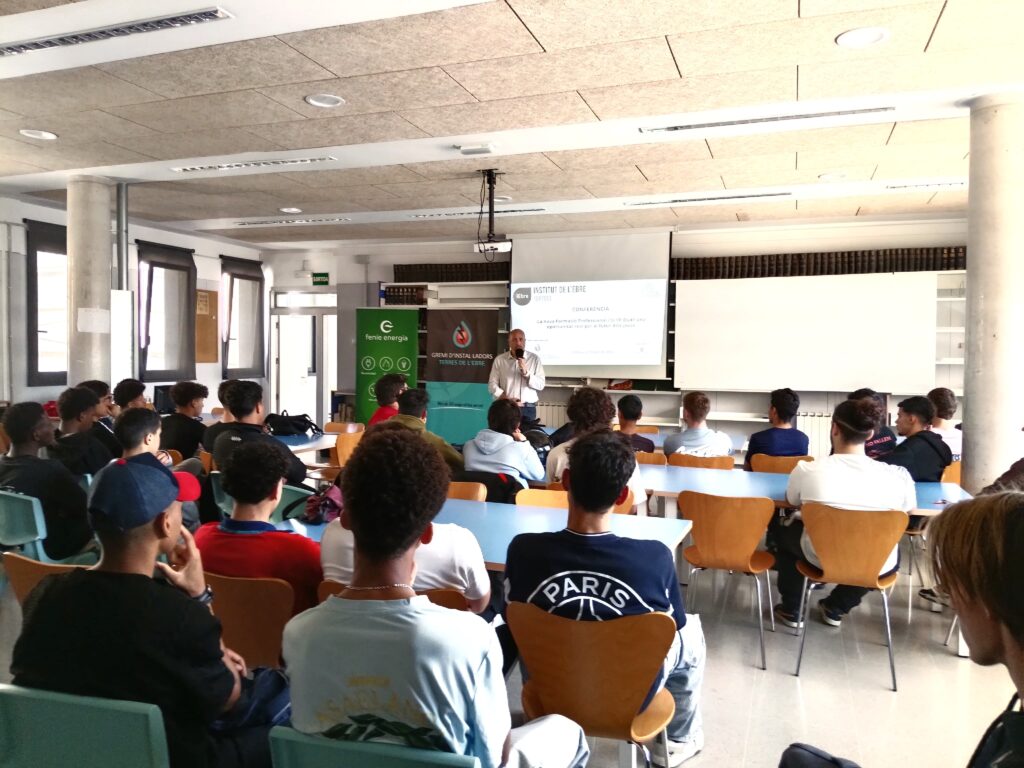
My presentations always begin with a simple idea: energy and fluids are not just technical sectors; they are sectors of life. They are present in every home, every business, every piece of infrastructure, and every technological advancement that allows us to live more efficiently, safely, and sustainably. Therefore, those who train in these disciplines today not only acquire professional skills: they become agents of social transformation.
I explain to the students that career paths in this field are numerous and flexible. An installation technician can evolve towards specialization in renewables, automation, energy management, building efficiency, electric mobility, or industrial maintenance. They can start their own business, work for a large company, join an engineering firm, work in project supervision, or even become a trainer. There isn’t just one path; there’s an ecosystem of opportunities that grows in tandem with the energy transition.
I also talk to them about the human value of these professions. I share real stories of installers, technicians, and specialists who have found in their work not just a job, but a professional identity based on social utility, quality work, and the satisfaction of seeing how their work improves people’s lives. I show them that vocational training isn’t a backup plan, but a path to excellence that demands responsibility, knowledge, digital skills, adaptability, and a commitment to quality.
In every educational center, young people discover that the energy sector isn’t a distant or inaccessible territory. It’s a sector that needs talent, seeks technical profiles, values practical training, and offers stability, growth, and recognition. And this is where the Fenie Energía Foundation plays a vital role: bringing the realities of the energy sector into classrooms, supporting students, assisting teachers, and highlighting the impact of these professions on society.
This article also serves as an invitation to other professionals who, like me, visit schools and share their experiences. Our stories are a powerful tool for inspiring vocations, guiding decisions, and demonstrating that behind every installation, every electrical panel, every air conditioning system, or every solar panel, there is a potential career path for any young person eager to learn and grow.
The Fenie Energía Foundation promotes these values because it understands that Spain’s energy future is built from the ground up: from classrooms, from vocational training, from the motivation of those who are starting today and will lead the energy transition tomorrow. And every conference, every mentoring session, and every visit to a school is another piece in this collective commitment.